
Top 5 E-commerce Warehousing Challenges SMEs Face—and How to Solve Them
In today’s fast-paced e-commerce landscape, warehousing has evolved into more than just a storage facility. It’s a vital link that determines whether an e-commerce business can meet customer expectations, maintain competitive pricing, and achieve business growth.
For small and medium enterprises (SMEs), however, warehousing is often where most logistics challenges begin. Without efficient warehouse management, even the most promising brand can struggle with lost sales and decreased customer satisfaction due to delayed deliveries. If this trend continues, it can significantly impact your service quality.
Let’s take a closer look at why warehousing plays a crucial role in the supply chain. By the end of this guide, you'll see how SMEs can avoid high logistics costs and increase their margins by optimising their warehousing.
Key Takeaways
Warehousing plays a crucial role in maintaining efficient supply chains and ensuring customer satisfaction.
Space constraints, resource strain, single-location limitations, returns inefficiency, and high operating costs are the top five logistical challenges SMEs face.
Adopting warehouse management software, automated inventory management, and data analytics can significantly improve warehouse operations and operational efficiency.
Partnering with a reliable third-party logistics provider like Airpak Express gives SMEs access to flexible warehousing solutions, affordable logistics processes, and global fulfilment centres that support business growth and satisfied customers.
Importance of Warehousing in E-commerce
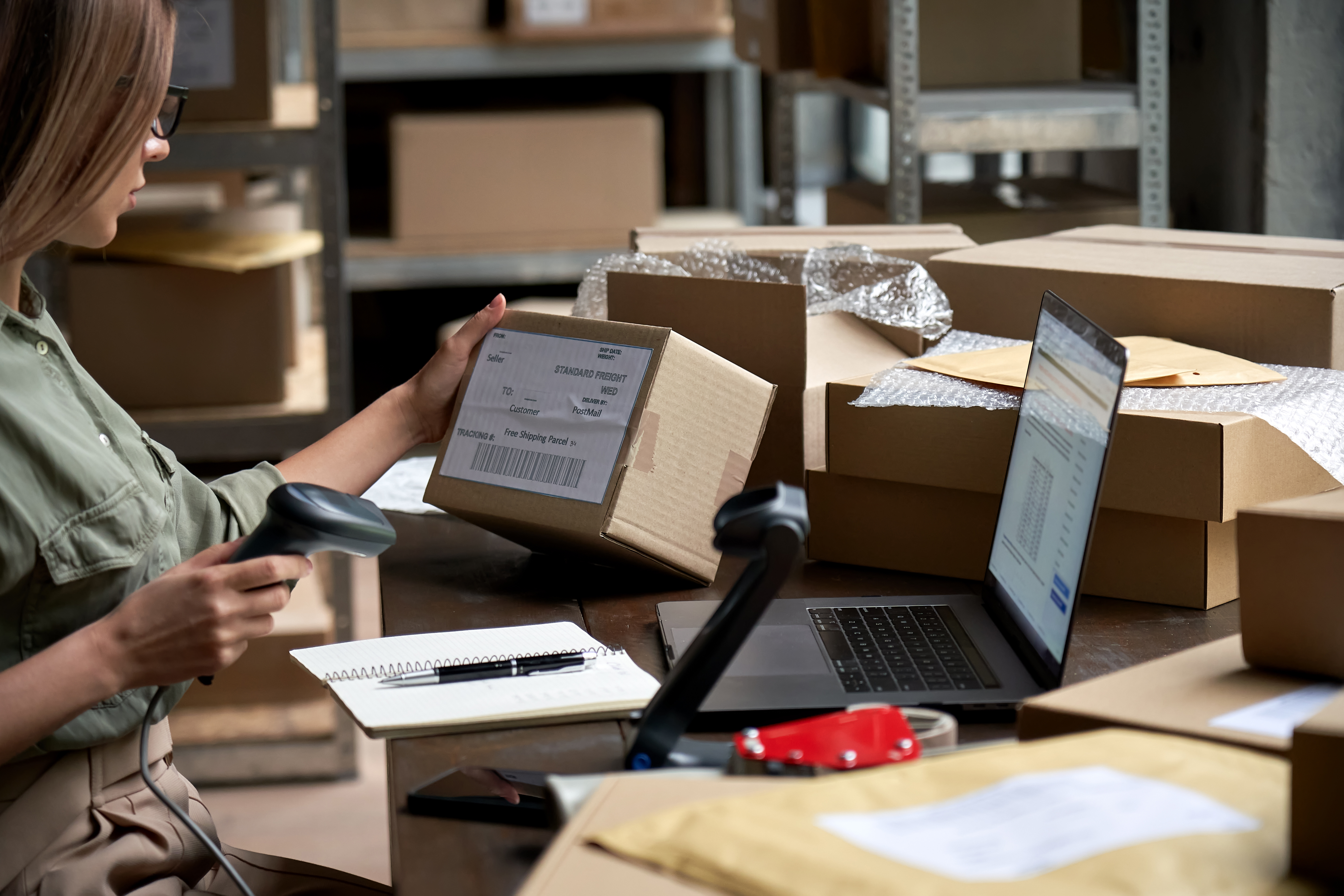
In e-commerce, every second counts after a customer places an order. E-commerce warehousing bridges the gap between order placement and timely delivery, ensuring that products are stored, packed, and shipped efficiently.
It's crucial to note that warehousing doesn't just mean stocking your inventory on shelves. Warehousing also involves maintaining inventory accuracy: ensuring that a company's inventory system closely matches physical stock.
This involves a whole set of skills and know-how, from barcode scanning to maintaining SKUs to picking and packing. It consists in keeping track of which orders have been fulfilled in order to keep count of existing stock.
Good warehouse operations are the backbone of an efficient supply chain. An efficient warehouse:
Supports order fulfilment processes
Reduces your operational costs
Directly impacts customer satisfaction.
Maintains accurate inventory tracking
Observes effective inventory management
Ensures order processing is fast and error-free.
Some warehouses also provide fulfilment services, meaning they track orders, pack them, and ship them out to the customer. So, in addition to inventory management, these warehouses also have robust order fulfilment processes.
As such, given all the gears involved in warehousing, e-commerce SMEs are likely to face a few challenges. These challenges are especially true for those doing their warehousing in-house.
Top 5 Warehousing Challenges SMEs Face in E-commerce
#1 Space Constraints Can Limit Scalability
Problem
One of the biggest issues for small and medium enterprises is space constraints. Limited storage space in traditional warehouses can restrict the amount of stock a business can hold. When customer demand spikes, especially during major sale seasons, the limited stock afforded by space constraints often leads to understocking.
Then, in turn, delayed fulfilment and lost sales. On the other hand, acquiring more storage to meet demand can be costly. This is overhead you'll continue to pay, even for idle stock. In which case, you're overstocked.
Solution
Inefficient storage management is an inevitable burden for e-commerce businesses that are still getting a feel for their product's demand. To overcome this, SMEs can explore flexible warehousing solutions, such as on-demand warehousing or partnering with third-party logistics (3PL) providers like Airpak Express.
Through smart storage practices and warehouse management systems, these partners help businesses scale through a "pay-as-you-go" model.
Flexible warehousing allows SMEs to manufacture according to customer demand without worrying about limited warehouse space.
It also means that SMEs suddenly needing more stock due to peak seasons won't have to sign costly, long-term leases to meet demand.
On-demand storage providers, such as Airpak, utilise automated storage systems and data analytics to anticipate spikes in customer demand. In turn, warehouses can allocate warehouse space more efficiently for each client.
#2 Resource Strain During Peak Periods

Problem
During peak sales seasons, such as the holidays, Black Fridays, or flash sales, order processing can easily overwhelm SMEs. Without sufficient manpower or automation, bottlenecks occur in packing processes, inventory control, and shipping coordination. The result? Longer delivery times, delayed updates on delivery status, and unhappy customers.
Solution
The key is in automation and smart fulfilment.
Implementing warehouse management systems allows SMEs to handle spikes in volume without drastically increasing headcount (Which can lead to more overhead).
Forecasting peak seasons should prepare staff for an increased workload resulting from heightened demand. Integrating standard operating procedures around these peaks should mitigate resource strain.
Outsourcing to logistics partners like Airpak Express gives SMEs access to scalable warehousing and order fulfilment capabilities. Airpak’s customised solutions ensure a smooth flow of operations even during high-demand periods.
These solutions help maintain on-time delivery during peak seasons, giving you the competitive advantage over other eCommerce SMEs.
Implementing warehouse management systems allows SMEs to handle spikes in volume without drastically increasing headcount (Which can lead to more overhead).
Forecasting peak seasons should prepare staff for an increased workload resulting from heightened demand. Integrating standard operating procedures around these peaks should mitigate resource strain.
Outsourcing to logistics partners like Airpak Express gives SMEs access to scalable warehousing and order fulfilment capabilities. Airpak’s customised solutions ensure a smooth flow of operations even during high-demand periods.
#3 Single Warehouse Location May Hinder an International Venture
Problem
Many SMEs start with a single warehouse near their headquarters, which makes sense initially. However, as they expand internationally, relying on a single warehouse location can result in delayed shipments, higher shipping costs, and inconsistent delivery times. This may result in poor service, especially in regions farther away from you. Not a good way to expand internationally.
Suppose you're a clothing retailer in Southeast Asia. You'll inevitably charge higher shipping and incur a longer delivery time for the European region.
Solution
To serve international markets effectively, businesses require a network of strategically located fulfilment centres and warehouses across key regions. This global approach enables faster dispatch, reduced transportation costs, and improved supply chain management.
However, it can be costly to establish warehouses in strategic locations worldwide. This is where logistics providers like Airpak Express come in. With its extensive logistics network across Asia and beyond, Airpak offers innovative solutions that enable e-commerce businesses to ship internationally. This allows SMEs to maintain timely delivery or service quality, regardless of where their customers are in the world.
By integrating with Airpak’s globally distributed fulfilment network, SMEs can ship from across multiple locations and ensure customers receive their parcels on time, anywhere in the world!
#4 Inefficient Returns Processing
Problem:
Returns are an inevitable part of e-commerce. However, inefficient returns processing can turn this routine operation into a nightmare. Without proper inventory management systems, returned items might get lost, mislabelled, or left unprocessed, resulting in inaccurate inventory levels.
Worse, when customers report that returns aren’t processed, trust erodes fast. Those reviews signal a lack of customer care and can meaningfully damage your brand

The Solution:
You'd want to set expectations and provide clear instructions for the return process. This includes:
Have a return policy. This should indicate the rules of the return period. Would it be a 15-day return period? 30-days? What condition should the product be in in order to be eligible for return? Make sure to indicate this in your return policy.
Also, provide clear, guided instructions for your customers on returns. Should they provide a return label, or ship it back to you with the original label?
Where should the customer ship it? Should they ship it to your warehouse or to your main office? Provide an exact address.
Once you've provided your customers with instructions, you'd want to standardise your receiving process as well.
An automated inventory management system can help SMEs gain visibility into returned stock. Integrating the right inventory management software or partnering with a reliable courier service ensures that every returned item is tracked and updated in real time.
Partnering with a trusted third-party logistics provider, such as Airpak Express, can also simplify reverse logistics. Airpak’s streamlined logistics processes help businesses handle returns efficiently, from inspection and repackaging to restocking or disposal.
This improves operational efficiency, reduces turnaround time, and enhances customer satisfaction by making returns fast and hassle-free.
Have a return policy. This should indicate the rules of the return period. Would it be a 15-day return period? 30-days? What condition should the product be in in order to be eligible for return? Make sure to indicate this in your return policy.
Also, provide clear, guided instructions for your customers on returns. Should they provide a return label, or ship it back to you with the original label?
Where should the customer ship it? Should they ship it to your warehouse or to your main office? Provide an exact address.
#5 High Operating Costs
Problem
Running an in-house warehouse can be expensive. It involves:
Rent
Utilities
Labour
Equipment
Software subscriptions to Warehouse Management Systems
These all contribute to high operational costs.
Adding shipping and transportation costs on top, maintaining profitability becomes a significant challenge for SMEs. Especially when facing larger competitors with economies of scale.
Rent
Utilities
Labour
Equipment
Software subscriptions to Warehouse Management Systems