
3rd Party Logistics vs. In-House Operations: Which Is Right for Your Business?
3rd Party Logistics vs. In-House Operations: Which Is Right for Your Business?
When your e-commerce business is growing, one of the most important decisions you will face is how to handle your logistics operations. Should you build and manage your own team and warehouse (in-house logistics)? Or should you partner with a specialist provider, such as a 3rd party logistics (3PL) company? Both approaches have merits, but knowing which aligns best with your business goals, resources and growth trajectory is key.
In this article, we’ll walk you through a logistics checklist of what you’ll need if you manage logistics in-house, compare in-house vs third-party logistics across cost, control and scalability, break down real numbers (with reference to Singapore where possible), and help you decide which route is right for you.
Key Takeaways
Managing logistics in-house gives you complete control, but requires significant investment in warehouse space, equipment, staffing, systems and ongoing costs.
Working with a third-party logistics provider (3PL) offers flexibility, cost efficiency, access to logistics expertise and established networks; you trade some control for scalability and lower risk.
Evaluate cost categories: warehouse lease, equipment, staff, systems, shipping. In many cases, 3PL offers better cost efficiency, especially for growing or variable-volume businesses.
Choose the option that fits your business strategy: Are logistics and fulfilment a core operation you want to own? Or is logistics a means to an end, and your focus should be growth, product and customer relationships?
Partnering with a 3PL becomes especially compelling when you need to scale, deal with international markets, or reduce operational burden while maintaining high customer satisfaction.
Logistics Checklist: What Do You Need?
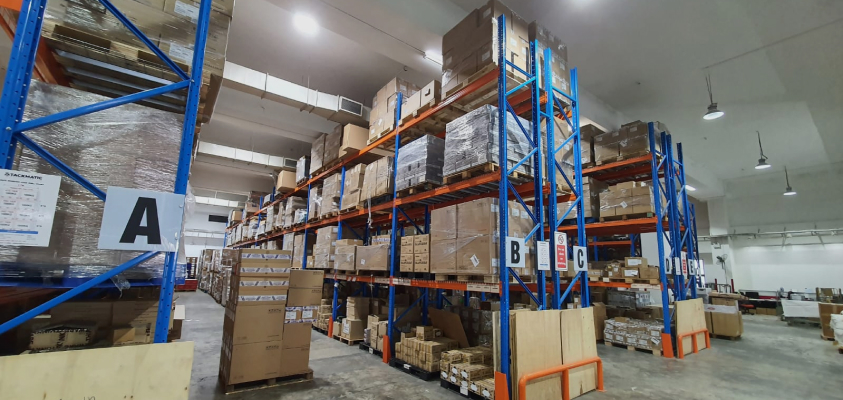 Before choosing between in-house logistics and a 3PL, it’s helpful to have a checklist of what running logistics in-house actually entails. This gives you a clearer view of the infrastructure, systems and expertise required.
Warehouse infrastructure: fit-for-purpose space, racking/shelving, pallet jacks/forklifts, staging areas.
Technology & systems: a WMS with barcode scanning, clean integrations to your e-commerce platform/OMS and carrier accounts, and basic inventory accuracy reporting.
People & process: warehouse manager, inventory lead, pick/pack team, logistics coordinator; SOPs for receiving, put-away, picking, packing, and returns.
Shipping & delivery: carrier contracts and rates, pickup schedules, and simple rate-shopping/SLA tracking.
The more of these you already have, the better-equipped you are to provide in-house logistics. Use this checklist to assess whether you’re ready to run logistics in-house or whether outsourcing to a logistics partner makes more sense.
The more of these you don't have, the more upfront cost is needed to check them all out. So it's important to weigh this consideration against your company's current capacity.
Difference Between In-House and Third-Party Logistics
Managing logistics in-house and engaging a 3rd party logistics provider (3PL) each has its pros and cons.
In-House Logistics (DIY Logistics)
Pros
Complete control over your logistics operations. You manage your own warehouse, staffing, systems, picking & packing, shipping and customer service.
You can tailor every part of the fulfilment process exactly as you want: packaging, branding, customer touchpoints.
With high volume and efficient operations, you can achieve cost savings by spreading fixed costs (warehouse lease, equipment, systems, staff) across many orders.
Cons
Significant upfront investment and ongoing operational costs: Leasing warehouse space, purchasing racking/equipment, software licences, hiring and training staff all add up.
You need systems and infrastructure. If you don’t already have it, you’ll need to build it.
Less flexibility for scaling up or down. Seasonal spikes or rapid growth may overwhelm your infrastructure or force costly expansions.
Third-Party Logistics (3PL Logistics)
Pros
Brings external logistics expertise, established infrastructure, and a distribution network. You leverage the logistics provider’s resources rather than building from scratch.
Lower fixed costs. You outsource warehousing, picking/packing/shipping and use their systems via a logistics partner. Variable costs scale with order volume.
Faster ability to scale, enter new markets, or handle seasonal demands because the 3PL’s infrastructure is designed for flexibility.
Cons
Less direct control over your logistics operations. You rely on the third party’s processes, systems and service quality.
Per-order costs may be higher for smaller volumes because your orders share infrastructure with other clients.
You are part of a shared network; customisation may be more limited compared to fully internal operations.
Cost Savings Through 3rd Party Logistics: Breaking Down the Real Numbers
To help you compare in-house vs 3PL, here are some typical cost categories and how they stack up.
Warehouse Rental
Comparing warehouse rental rates to 3PL warehousing solutions is an apples-to-oranges comparison, but a comparison we need to break down, nonetheless.
Let's look at some key differentiators:
Though 3PL costs more per cubic foot than when you rent out a warehouse, the service also offers significantly more cost and utilisation flexibility:
The 3PL rate already covers warehouse equipment, warehouse management software, and staff. These are handled by the 3PL so you wouldn't have to source and worry about them.
The 3PL rate is flexible, subject to change based on the actual storage you use. As opposed to the warehouse rental's fixed rate, wherein, regardless of how much space you actually use, you'd still be renting out the entire floor/warehouse.
So take note of these crucial considerations as well.
Warehouse Equipment
Warehousing and Order Fulfilment Staff
You'll also need staff to manage the warehousing and fulfilment aspects of your e-commerce business. After all, those orders won't pack and ship themselves.
You'll need at least the following roles: a warehouse manager, an inventory manager, pickers and packers, and a logistics coordinator.
Note how opting for a 3PL solution moves your salary and manpower expenditures to order processing fees. These fees pay for the 3PL's in-house salaries.
Warehouse Management System
You need a warehouse management system (WMS) to manage inventory, track picking/packing, integrate barcode scanning, and monitor shipping and returns.
Note that in addition to the software license itself, you'll also have to allocate time and resources to training your staff to use the necessary tools.
The provider usually has an established WMS. You benefit from “logistics technology” without building your own. The cost is included in the service fee, and you gain from their scale.
Shipping and Delivery
Even if you provide all your logistics in-house, you'll still need to outsource a shipping provider. Unless you could afford a fleet of trucks, motorcycles, and drivers.
Courier rates differ from end-to-end logistics rates, however.
It's important to note that the shipping and delivery system of end-to-end logistics providers is already integrated into their overarching process: from warehousing, picking and packing, and shipping.
Whereas with in-house logistics, shipping and delivery tend to be a separate phase from your in-house processes.
Summary Table (Indicative):
Which is Right for Your Business?
The decision between in-house fulfilment (house logistics) and a 3PL (outsourced logistics) depends on your business stage, volume, growth plans, resources, and logistics strategy.
When is In-House Fulfilment Ideal?
You have high and steady order volume that justifies the fixed costs of warehouse lease, staffing and systems.
You already have capital, logistics expertise, infrastructure and staffing to manage logistics operations internally.
You have predictable demand and low variability, so the cost efficiency of your own warehouse and staff makes sense.
You're not established or large enough to outsource to a 3PL. You're small enough to fulfill orders in-house due to the manageable number of orders. Outsourcing to 3PL won't make sense at this time.
When is 3PL Ideal?
You’re an e-commerce business with limited logistics resources
You want to focus on your core operations: product development, marketing, and customer relationships, rather than managing logistics infrastructure.
You are scaling rapidly or entering new markets, you want flexibility to handle peaks (seasonal demand), and you need an established distribution network and fulfilment centres.
You want lower upfront investment and access to a partner with logistics expertise, advanced technology, and bulk shipping rates.
In many cases, small and medium-sized online sellers will start with a 3PL to achieve cost efficiency and flexibility, and only consider full in-house logistics once volume is very high and predictable.
Get in Touch with a 3PL Today!
If you’re considering outsourcing logistics or want to compare how a third-party logistics provider could transform your operations, now is the time to act.
Here at Airpak, we are a logistics partner with established infrastructure, advanced logistics technology, and real-time tracking and inventory management. Our services can free you up, allowing you to focus on business growth and customer satisfaction.
We manage fulfilment, shipping, and the entire supply chain, so your business can scale, reduce operational costs, and deliver reliable, timely deliveries to your customers.
Get in touch with Airpak Express today and see how we can transform your logistics processes.
Frequently Asked Questions
What Is A Third-Party Logistics (3PL) Provider?
A 3PL is a specialist logistics partner that handles warehousing, fulfilment, shipping, inventory management and often returns for you. They have infrastructure, expertise and network you can leverage.
How Much Does In-House Logistics Cost?
Costs can be high. It involves warehouse lease, equipment, staff salaries, systems, shipping contracts and variable costs. Expect to pay no less than S$20,393 per month, and an additional S$8,600 for one-time expenditures.
When Should I Switch From 3PL To In-House Logistics?
Consider moving in-house if you have very high and stable order volume, logistics is a core differentiator for your brand, you have the capital and staff, and you want full control over fulfilment processes and customer experience.
Does Using A 3PL Mean I Lose Control Over Logistics Operations?
Not entirely. A good 3PL integrates with your systems (order management, inventory tracking) and offers transparent performance metrics. While you delegate operational burden, you retain oversight over service levels, branding and customer experience.
How Can A 3PL Improve Cost Efficiency?
By leveraging bulk discounted shipping rates, optimised warehouse utilisation, shared infrastructure across multiple clients, and logistics expertise. These factors lead to lower operational costs and greater flexibility.
No time to manage complex post-shipment invoicing? Airpak ShipNow is your answer.
Prepaid shipping service catering to all your logistics needs.
Book and send your shipment with less than 5 clicks of the mouse!
Time to scale up your business. Let us handle the complexity of logistics management.
Register and create an account with us for seamless online ship management.
Access and manage all your shipments through one portal.