

Fulfilment Services Explained: What Every Business Owner Needs to Know
One of the most important pieces of the puzzle is how orders reach your customers.
It is not just about getting products out the door. It is about the order fulfilment process: the journey from when “the customer places an order” to when “the customer receives it”, and everything in between.
So, in this blog, we’ll go through that critical piece of the puzzle, covering:
What fulfilment services are
What a fulfilment provider does
Why they matter for e-commerce businesses
How the entire order fulfilment process works, and
If fulfilling orders in-house might be better for you compared to outsourcing to a fulfilment company.
Integrating e-commerce fulfilment optimises your supply chain process. You will be better equipped to serve your customers and scale your online store.
Key Takeaways
Fulfilment services form a vital part of your supply chain and define how your customers experience your brand.
The order fulfilment process involves receiving orders, picking and packing, shipping, confirming delivery and closing orders. Good inventory management is central to it.
You can either handle in-house fulfilment or use a 3PL fulfilment company. Each option has its pros and cons, depending on your scale and goals.
Outsourcing to a reliable fulfilment provider helps you reduce shipping costs, manage growth more smoothly, and maintain high shipping and customer service levels.
Choosing the correct method and partner helps you meet customer demand, improve business operations and boost your chances of repeat business.
Fulfilment services form a vital part of your supply chain and define how your customers experience your brand.
The order fulfilment process involves receiving orders, picking and packing, shipping, confirming delivery and closing orders. Good inventory management is central to it.
You can either handle in-house fulfilment or use a 3PL fulfilment company. Each option has its pros and cons, depending on your scale and goals.
Outsourcing to a reliable fulfilment provider helps you reduce shipping costs, manage growth more smoothly, and maintain high shipping and customer service levels.
Choosing the correct method and partner helps you meet customer demand, improve business operations and boost your chances of repeat business.
What are Fulfilment Services?

Put simply, fulfilment services cover the steps that happen once your customer places a purchase order on your online store, through to when that customer receives the item.
It covers the warehousing, packing, shipping, and customer service that ensure your order is delivered correctly and on time. It ensures that every order is closed and fulfilled.
However, all these can take considerable time and resources.
That's where fulfilment services come in: A fulfilment company (sometimes called a fulfilment provider) offers these services for you. This allows you to focus on product R&D, your marketing, and other critical areas of your business.
The right fulfilment services help you handle rising customer demand, optimise order management, and improve customer satisfaction. However, partnering with one that misplaces your parcels and faces constant delivery issues can leave a negative impression on your customers.
What can Fulfilment Services do for E-commerce Businesses?
If you're an e-commerce start-up, perhaps you get enough orders to store them in the corner of your office. As the owner, you likely also handle shipping your merchandise.
Instead of a website, you're selling on an online marketplace. Your order volume allows you to have the intimate time to personally write little 'Thank You' notes as you ship orders to each of your customers.
For these budding e-commerce merchants, a third-party fulfilment process may eat into their costs more than help them scale.
However, for SMEs receiving a large number of orders, they can contact a fulfilment company to handle the entire order fulfilment process on their behalf. This allows the SME to:
Enhance their order fulfilment capacity, especially when orders are coming in rapidly.
Focus on other mission-critical areas, such as marketing and research
Reduces customer dissatisfaction by providing timely delivery
Scale their business in general
Having a third-party provider worry about the entire process of fulfillment can help e-commerce companies efficiently manage their growth.
So if you're looking to grow your business, perhaps expand your services outside a local market, you may consult with a fulfilment company and see how they can integrate into your operations.
Enhance their order fulfilment capacity, especially when orders are coming in rapidly.
Focus on other mission-critical areas, such as marketing and research
Reduces customer dissatisfaction by providing timely delivery
Scale their business in general
Warehousing and Fulfilment vs. Warehousing Only
When reaching out to third-party service providers, it's worth clarifying the difference between “just warehousing” and “warehousing & fulfilment”.
Warehousing only means your goods are stored in a warehouse facility. You still handle picking, packing, shipping and all customer-order management. The warehouse simply provides the space and maybe basic handling. You'll still need to ship customer orders.
Warehousing and fulfilment means that the fulfilment centre takes care of not only storage, but also the full workflow of the order fulfilment process. This involves receiving inventory, storing, picking, packing, shipping, handling returns, managing order and inventory data, and everything that goes into the fulfilment process. Not just warehousing.
Warehousing only means your goods are stored in a warehouse facility. You still handle picking, packing, shipping and all customer-order management. The warehouse simply provides the space and maybe basic handling. You'll still need to ship customer orders.
Warehousing and fulfilment means that the fulfilment centre takes care of not only storage, but also the full workflow of the order fulfilment process. This involves receiving inventory, storing, picking, packing, shipping, handling returns, managing order and inventory data, and everything that goes into the fulfilment process. Not just warehousing.
The Order Fulfilment Process

Below is a breakdown of the entire order fulfilment process, from receipt of the order all the way to closing an order.
Receive Order
The first step happens when the customer places an order via your online store or marketplace. The order is received by your order management system (or the fulfilment provider’s system).
Warehouse and order fulfilment staff would note the order and begin to pick and pack.
Pick and Pack
This is where pickers retrieve the correct items from storage, verify quantity and condition, and stage them for packing.
Label Printing
After picking and packing, the items are labelled. The correct shipping label and tracking number are prepared and then attached to the package. This step is crucial for both outbound shipping and for accurate returns handling.
Shipping
The order is handed over to a courier and delivered to the customer. The shipping method will depend on your order fulfilment provider. If your provider offers an end-to-end logistics solution, such as Airpak Express, which handles shipping and delivery, they will provide shipping services.
However, if your provider only handles warehousing and fulfilment, then it's likely they'll outsource a courier to ship out your orders.
Confirm Delivery
Once the package arrives at the customer’s address, the delivery status is confirmed. Tracking information may be shared with the customer to provide stellar customer service.
Close Order
After successful delivery, the order is closed in your system. Inventory is updated, order records are archived, and any returns or issues are logged. If all went well and your customer is satisfied, you've secured potential future sales.
Returns Processing
If a customer is dissatisfied with the order they've received (e.g., wrong size or colour), they may initiate a return. In such cases, your order fulfilment services provider would also need to handle the safe return of the product to the warehouse.
The fulfilment provider liaises with the customer to ensure a proper return. As the provider of your warehousing as well, they would tally the returned item back to the inventory.
Types of fulfilment Service
In-House fulfilment (Self-Fulfilment)
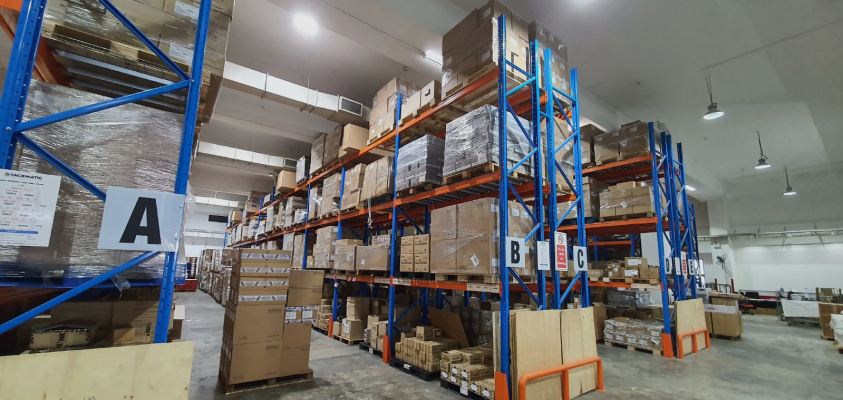
Self-fulfilment is an excellent choice for two types of e-commerce businesses: 1) the budding e-commerce merchant that would benefit from the sense of fulfilment of processing their own existing sales, and 2) the merchant that already has their own fulfilment strategy, along with the necessary facilities and resources. In other words, they have a robust in-house fulfilment department.
The pros and cons of fulfilling orders in-house are as follows:
Pros:
You retain complete control over your product, packaging, branding, customer order handling, and can keep everything in-house.
You may avoid certain order fulfilment costs associated with outsourcing if your volume is low and operations are simple.
Cons:
Requires dedicated warehouse space, labour, courier contracts and infrastructure for inventory control and packing.
Difficult to scale when customer orders increase; you may struggle with storage, shipping logistics, or international expansion.
You carry all the risk for delays, errors, shipping cost fluctuations and returns.

You retain complete control over your product, packaging, branding, customer order handling, and can keep everything in-house.
You may avoid certain order fulfilment costs associated with outsourcing if your volume is low and operations are simple.
Requires dedicated warehouse space, labour, courier contracts and infrastructure for inventory control and packing.
Difficult to scale when customer orders increase; you may struggle with storage, shipping logistics, or international expansion.
You carry all the risk for delays, errors, shipping cost fluctuations and returns.
3PL fulfilment (Outsourced Order Fulfilment)
3PL fulfilment is ideal for those who want to expand their market and operations, but don't have the resources to invest in in-house labour and infrastructure.
It may also benefit those who have the resources but wish to allocate them elsewhere. For example, manufacturing, R&D, or marketing perhaps.
The pros and cons of 3PL fulfilment are as follows:
Pros:
A dedicated, outsourced fulfilment provider. A third-party logistics (3PL) fulfilment company takes care of storage, picking, packing and shipping, reducing your operational burden.
You benefit from their existing warehouse facilities, carrier networks, negotiated shipping rates, and systems that manage inventory levels and order workflows.
Enables you to scale faster, reach more customers (including international markets), and maintain high customer satisfaction.
Cons:
You relinquish some direct control over how the fulfilment process is executed. You rely on a partner for service quality.
There is a cost for the service. For each order, you pay fees for warehousing, picking, packing, shipping and sometimes returns.
You must choose a reliable partner and integrate your systems (e.g., your online store with their order management system) to avoid disconnects or inefficiencies.
You can mitigate some of these cons with a reliable partner. It's therefore crucial that if you wish to grow your e-commerce business, you select an end-to-end logistics partner with industry experience. A partner that handles not just fulfillment, but also international shipping for when you want to scale.
A dedicated, outsourced fulfilment provider. A third-party logistics (3PL) fulfilment company takes care of storage, picking, packing and shipping, reducing your operational burden.
You benefit from their existing warehouse facilities, carrier networks, negotiated shipping rates, and systems that manage inventory levels and order workflows.
Enables you to scale faster, reach more customers (including international markets), and maintain high customer satisfaction.
You relinquish some direct control over how the fulfilment process is executed. You rely on a partner for service quality.
There is a cost for the service. For each order, you pay fees for warehousing, picking, packing, shipping and sometimes returns.
You must choose a reliable partner and integrate your systems (e.g., your online store with their order management system) to avoid disconnects or inefficiencies.
Which Type of Fulfilment Service is Right for Me?
In-house fulfilment is ideal if:
If your e-commerce business is small
Has limited SKUs
Caters to local customers
Has a manageable number of orders
Then, in-house fulfilment may suit you. It gives you full control, and as long as your order volume remains manageable, you may keep order fulfilment costs low.
On the other hand, 3PL fulfilment is ideal if:
If you face increasing orders
You want to focus on other areas outside the logistics side of your business
You wish to increase your fulfilment capacity
Choose a fulfilment partner who can integrate with your online store, provide transparent order processing, manage inventory, and share performance metrics. Ask about their shipping costs, carrier options, returns processes, and how they handle peak demand.
If your e-commerce business is small
Has limited SKUs
Caters to local customers
Has a manageable number of orders
If you face increasing orders
You want to focus on other areas outside the logistics side of your business
You wish to increase your fulfilment capacity
Avail Warehousing and Fulfilment Today!
If you’re ready to take your e-commerce operations to the next level, a partner like Airpak Express will help you scale your business growth.
We handle the heavy lifting of storing your inventory and processing your orders through our warehousing and fulfilment services. All with the goal of improving customer satisfaction and growing your brand. By delegating your logistics to us, you can focus on more business-critical areas, such as marketing and product development.
Reach out to us today and see how we can integrate with your online store. We may also consult if you have growth and international ambitions.
Frequently Asked Questions
What Are Order Fulfilment Services?
Order fulfilment services refer to the range of functions that handle customer orders after they are placed. This includes inventory storage, picking and packing, shipping, delivery confirmation and management of returns.
How Do Fulfilment Services Help Reduce Shipping Costs?
Fulfilment providers negotiate volume discounts with shipping carriers, optimise packaging to avoid excessive dimensional weight, and use efficient shipping logistics to lower costs for each order.
When Should I Switch From In-House Fulfilment To Outsourcing With A 3PL?
Consider switching when your order volume increases. When your warehouse space is stretched, you want to reach international customers, or you’d rather focus on sales and product rather than handling logistics, you’ll need a 3PL.
What Should I Ask A Fulfilment Company Before Partnering?
Ask about their warehouse facilities, integration with your online store, shipping carriers used, charges for picking/packing/shipping, returns management, and how they ensure inventory management and accuracy.
Does Outsourcing Fulfilment Mean Losing Control Of My Brand?
Not necessarily. A good fulfilment provider will integrate with your brand, use your packaging, provide visibility into the process and treat your customer orders as if they were their own. You maintain oversight while they handle logistics.
No time to manage complex post-shipment invoicing? Airpak ShipNow is your answer.
Prepaid shipping service catering to all your logistics needs.
Book and send your shipment with less than 5 clicks of the mouse!
Time to scale up your business. Let us handle the complexity of logistics management.
Register and create an account with us for seamless online ship management.
Access and manage all your shipments through one portal.