

How to Choose a One-Stop Omnichannel Logistics Partner
Selling across your website, marketplaces, social commerce channels, and offline touchpoints can unlock growth, but it also creates operational complexity fast. Orders come in from different platforms. Inventory needs to stay accurate across channels.
Delivery expectations vary by market. Returns become harder to manage as sales volume increases or international shipping is introduced. That pressure is real: Baymard Institute’s 2025 cart abandonment research found that 21% of shoppers abandon checkout because delivery is too slow, while 15% leave because the returns policy is not satisfactory.
That is why many businesses look for a one-stop omnichannel logistics partner. Instead of piecing together separate warehouse providers, shipping partners, tech tools, and returns workflows, you work with a provider that can support the broader logistics operation in a more connected way.
The goal is not just convenience. It is better control, fewer handoffs, omnichannel fulfilment and a smoother experience for both the business and the customer.
In this guide, we’ll focus on how to properly evaluate a one-stop omnichannel logistics partner, what to look for, what questions to ask, and what mistakes to avoid before choosing one.
What Is a One-Stop Omnichannel Logistics Partner?
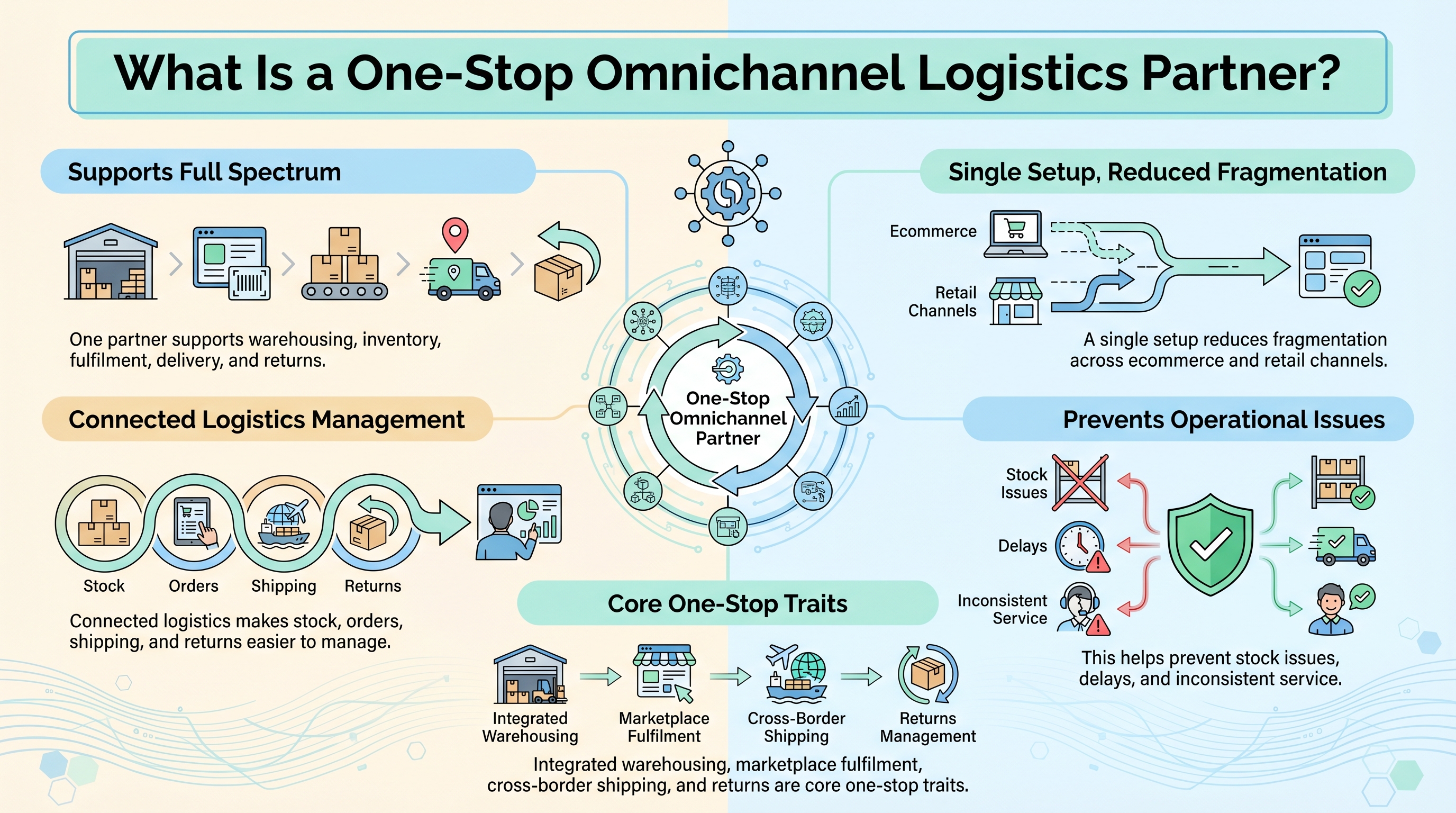
A one-stop omnichannel logistics partner is a provider that supports multiple parts of your fulfilment and logistics operations under a single setup. This usually includes warehousing, inventory management, order fulfilment, delivery coordination, and returns handling across multiple sales channels.
Instead of managing separate providers for storage, marketplace fulfilment, last-mile delivery, and cross-border shipping, you work with a single logistics partner that connects these functions more closely.
The idea is to reduce fragmentation and make it easier to manage stock, orders, shipping, and returns across your ecommerce and retail channels.
This matters because omnichannel selling is not only about being present on multiple channels. It is also about making sure those channels can be supported operationally without creating stock issues, fulfilment delays, or inconsistent service.
The current Airpak page already highlights integrated warehousing, marketplace fulfilment, cross-border operations, returns handling, and centralised logistics management, which are the core traits buyers expect from a one-stop provider.
Why Businesses Need One-Stop Omnichannel Logistics Support
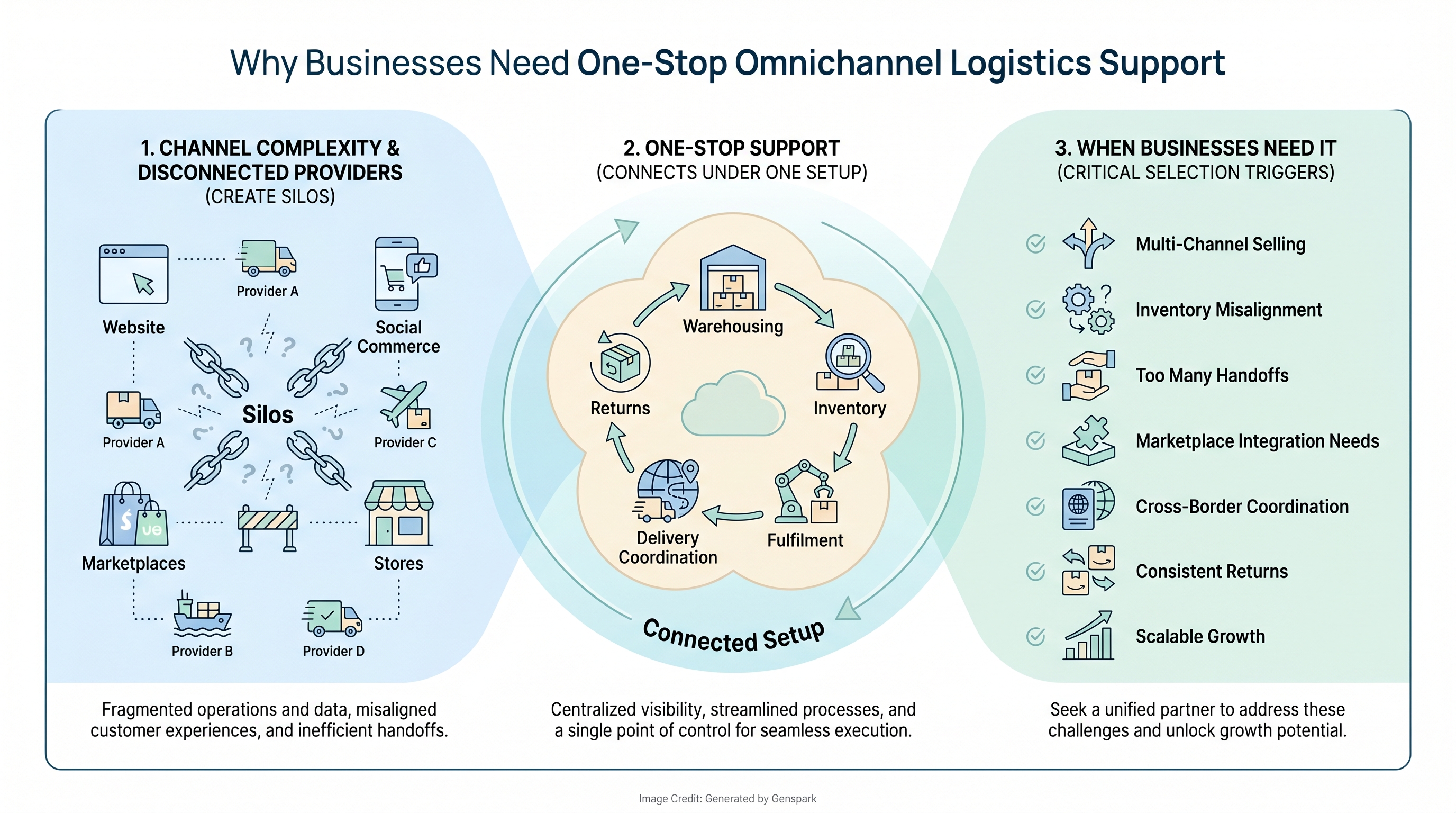
As channel complexity grows, logistics becomes harder to manage through disconnected providers and manual coordination.
A business may sell through its own website, marketplaces, social commerce, and physical channels, but if inventory, order handling, and delivery are still managed in separate silos, the operation becomes harder to scale.
This is where one-stop support becomes valuable. A more integrated logistics model can help reduce fulfilment errors, improve stock visibility, simplify coordination, and make it easier to maintain service consistency across channels.
The current article already frames this in terms of streamlined operations, cost efficiency, customer experience, and scalability. Those points are still useful, but in the revised version, they should support the provider-selection angle rather than sit as general benefits.
In practical terms, businesses usually need one-stop omnichannel logistics support when:
they are selling across multiple channels and struggling to keep inventory aligned
they want fewer operational handoffs between warehousing, fulfilment, and delivery
they need stronger support for marketplace or e-commerce platform integration
they are expanding internationally and need cross-border coordination
they want returns and reverse logistics handled more consistently
they need a logistics setup that can scale with growth
7 Things to Look for in an Omnichannel Logistics Partner
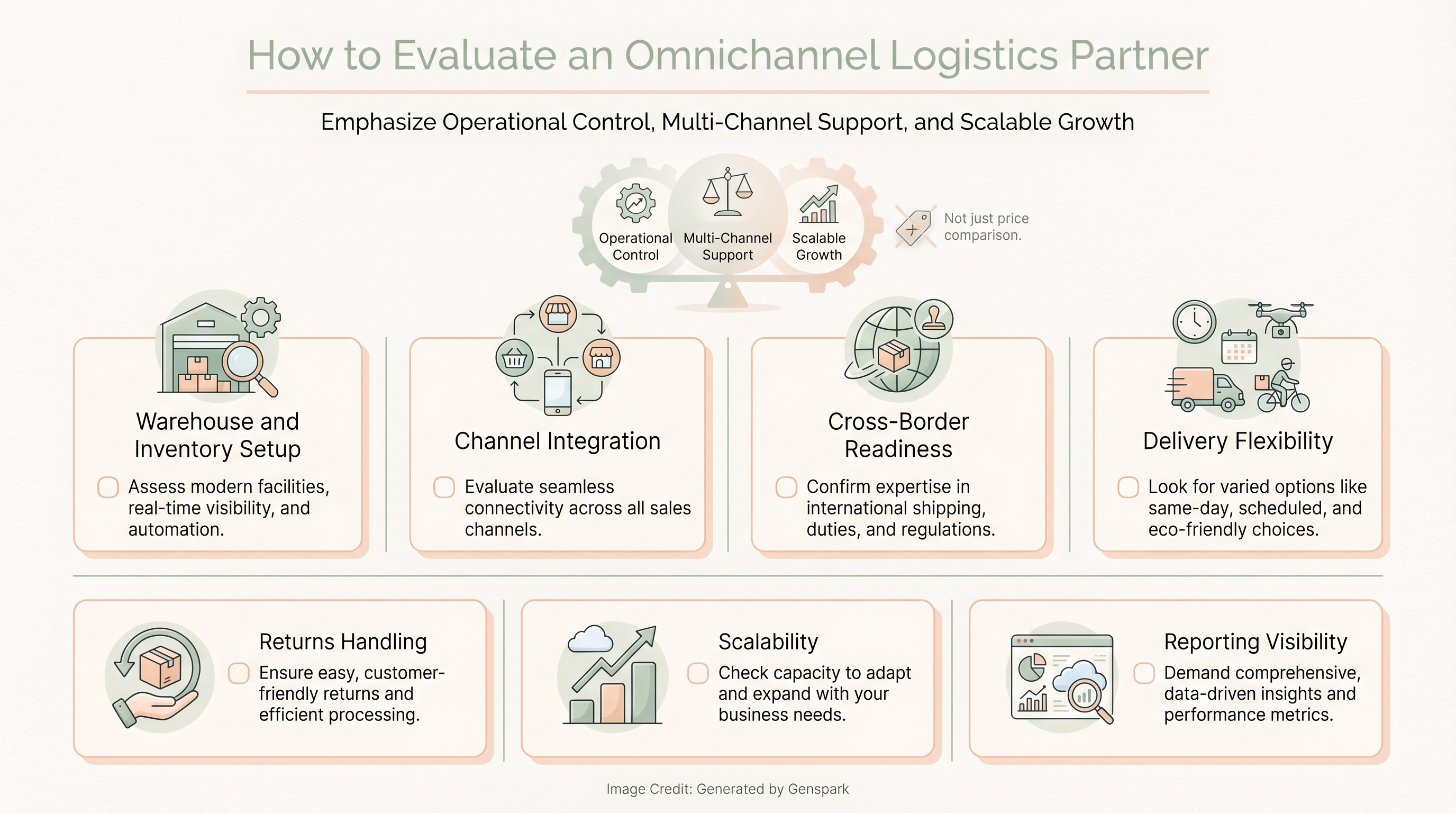
Choosing an omnichannel logistics partner requires more than comparing pricing or storage capacity.
If you want a setup that can support multiple sales channels, improve operational control, and scale with your business, you need to assess the provider’s capabilities much more closely. These are the key areas I would evaluate before making that decision.
Integrated Warehousing and Inventory Management
Start with the warehouse setup. A strong omnichannel logistics partner should do more than just store stock. They should support inventory visibility across channels, flexible picking and packing workflows, and efficient handling of different order types.
Look for a provider that can support a shared inventory view, reduce stock mismatches, and help you manage both B2B and D2C order flows if needed.
The current page highlights real-time inventory tracking, unified stock pools, and flexible warehouse operations, which are exactly the kinds of capabilities buyers should assess early.
What to check:
whether inventory updates can stay aligned across channels
whether the warehouse supports different order profiles
whether you can scale storage and fulfilment capacity over time
whether stock allocation can support multiple sales channels without constant manual intervention
Marketplace and E-commerce Platform Integration
A logistics provider may have strong warehousing, but that alone is not enough if your orders still need to be handled manually across platforms.
If you sell on marketplaces or through ecommerce platforms, your logistics partner should be able to support integration with the channels that matter to your business. The current page specifically mentions major marketplaces and ecommerce workflows as part of modern omnichannel operations.
What to check:
which ecommerce platforms and marketplaces they already support
whether orders, stock, and fulfilment statuses can sync automatically
how they handle stock updates to reduce overselling
whether onboarding new channels later will be straightforward
Cross-Border Fulfilment Capability
If international growth is part of your plan, cross-border support should not be treated as an add-on. It should be part of the selection process from the start.
The current Airpak article already identifies customs, regional compliance, control of international shipping costs, and local market requirements as central parts of omnichannel logistics.
That is important because many providers can handle domestic fulfilment, but fewer can support cross-border operations well.
What to check:
whether they support your key target markets
whether they can help with customs documentation and clearance workflows
whether they understand local labelling, packaging, and delivery requirements
whether international service levels are clear and realistic
Flexible Fulfilment and Delivery Options
A strong omnichannel logistics partner should be able to support multiple fulfilment models. Different products, markets, and customer segments often require different delivery speeds and service options.
The current page highlights flexible fulfilment options and coordinated logistics within the broader omnichannel model. In provider selection terms, that means asking whether the partner can support the delivery experience your customers actually expect.
What to check:
whether they offer multiple delivery service levels
whether they can support different fulfilment approaches as your business evolves
whether they can balance speed, cost, and service quality
whether failed deliveries or delivery exceptions are handled clearly
Returns and Reverse Logistics Support
Returns are often overlooked during provider selection, but they become critical once order volume grows or international customers are involved.
The current page already recognises returns management integration as part of successful omnichannel logistics. That should be turned into a stronger decision-making point in the new article.
What to check:
how returned orders are processed and restocked
whether reverse logistics is supported across channels
whether return workflows are efficient enough to protect customer experience
whether the provider can support exchanges, refunds, and damaged-item handling in a structured way
Scalability for Growth
The right logistics partner should not only fit your current operation. They should also be able to support the business's next steps.
The current page highlights scalability as a core benefit of a one-stop setup. In practice, this means checking whether the provider can support new channels, larger order volumes, more SKUs, and additional markets without forcing you into a full operational reset later.
What to check:
whether they can handle seasonal spikes
whether storage and fulfilment can expand with demand
whether adding new channels or markets is operationally realistic
whether the provider’s processes still work once complexity increases
Reporting, Visibility, and Operational Support
Finally, do not choose a provider based only on storage space or delivery rates. Visibility matters.
A strong partner should help you see what is happening across inventory, orders, fulfilment, shipping, and returns. The current article already points to real-time inventory tracking and centralised oversight as important capabilities.
What to check:
what reporting will you actually receive
whether shipment and inventory visibility is accessible in real time or near real time
whether operational issues are flagged clearly
whether support is proactive or only reactive when problems happen
Questions to Ask Before Choosing a Logistics Partner
Image Credit: Generated by Genspark
Before signing with any omnichannel logistics provider, I would ask questions like these:
Which channels and platforms do you currently integrate with?
How do you handle inventory synchronisation across channels?
Can you support both domestic and cross-border fulfilment?
What happens when there is a stock discrepancy or fulfilment exception?
How do you handle returns, exchanges, and reverse logistics?
What level of reporting and visibility will we get?
How do you support growth if order volumes increase or new markets are added?
What parts of the operation are managed directly by you, and what parts rely on external partners?
How long does onboarding usually take?
What will require manual intervention from our team?
These questions help move the conversation from marketing claims to operational reality.
Common Mistakes When Choosing an Omnichannel Logistics Provider
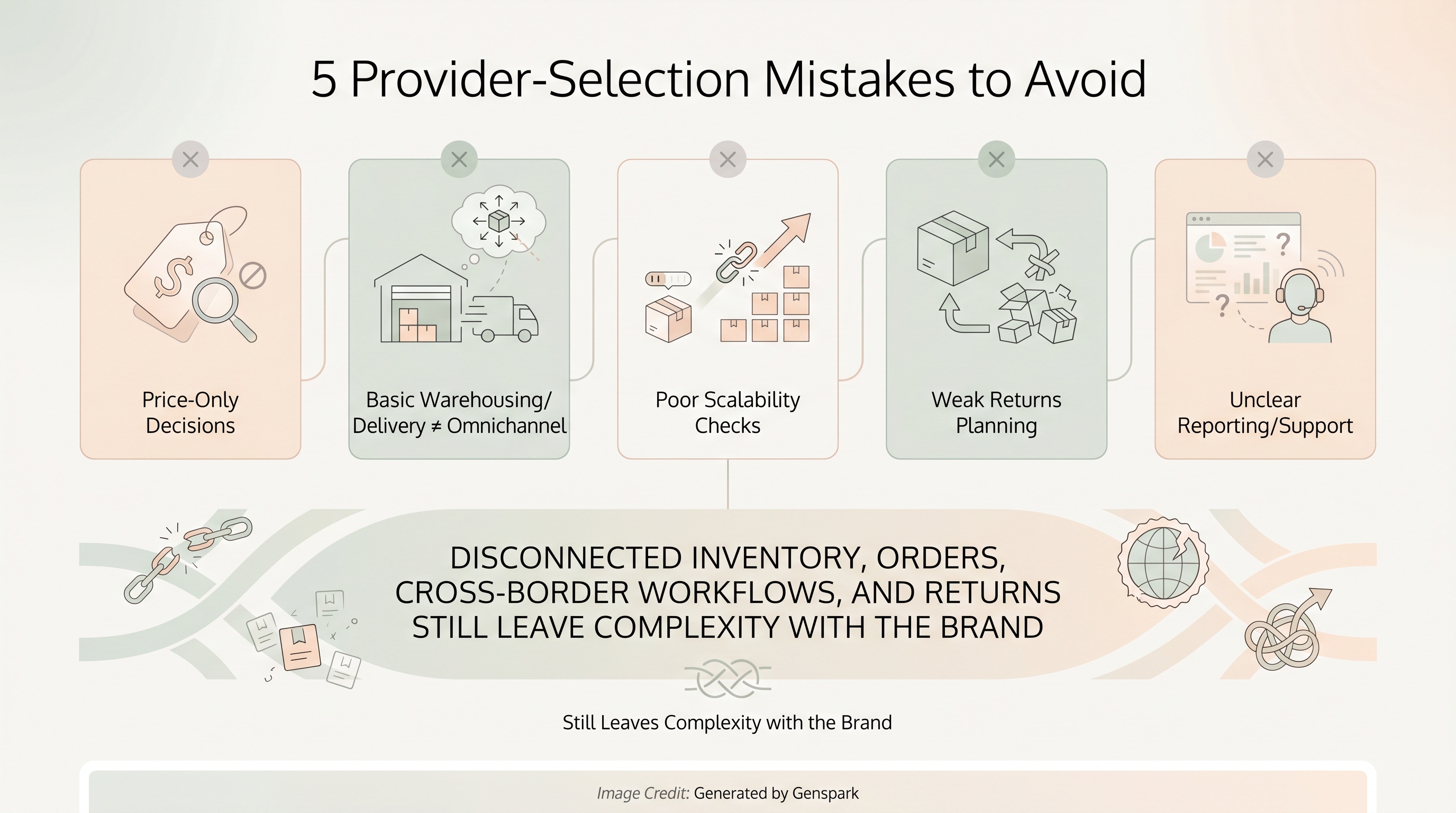
One common mistake is choosing based solely on price. Lower pricing can look attractive upfront, but if the provider cannot support your key channels, meet delivery expectations, or handle your operational complexity, the hidden costs show up later in delays, stock issues, and poor customer experience.
Another mistake is assuming that a provider is truly omnichannel just because they offer warehousing and delivery. That is not enough. If inventory, orders, marketplace workflows, cross-border processes, and returns still sit in disconnected setups, you may still end up managing complexity yourself.
A third mistake is ignoring scalability. Some providers work well at your current size but struggle once order volume grows, product mix expands, or new markets are added.
The fourth mistake is overlooking returns and reverse logistics. Outbound fulfilment often gets all the attention, but poor returns handling can damage both customer satisfaction and operational efficiency.
The fifth mistake is not checking how much visibility and support you will actually receive. A provider may promise integrated logistics, but if your team still lacks clear reporting, issue visibility, or reliable operational communication, the partnership may not deliver the control you need.
Is a One-Stop Omnichannel Logistics Partner Right for Your Business?
Image Credit: Generated by Genspark
Not every business needs a one-stop partner immediately. Some brands can still manage well with a simpler logistics setup, especially at an early stage or when sales are limited to one or two channels.
However, once you are selling across multiple platforms, expanding into new markets, or finding that disconnected systems are slowing down fulfilment and creating avoidable errors, a one-stop omnichannel logistics partner becomes much more relevant.
You are more likely to benefit from one if:
you sell across websites, marketplaces, and social commerce channels
inventory accuracy is becoming harder to maintain
you want stronger cross-border fulfilment support
you need a more structured returns process
you want fewer handoffs between warehousing, fulfilment, and delivery
your current setup is making growth harder to manage
Frequently Asked Questions
What Is a One-Stop Omnichannel Logistics Partner?
A one-stop omnichannel logistics partner is a provider that supports multiple logistics functions under a single setup, such as warehousing, inventory management, fulfilment, delivery coordination, and returns handling across multiple sales channels.
Why Should I Choose an Omnichannel Logistics Partner Instead of Separate Providers?
A more integrated setup can reduce operational handoffs, improve stock visibility, simplify coordination, and make it easier to manage fulfilment across channels as the business grows.
What Should I Look For in an Omnichannel Logistics Provider?
Focus on warehousing and inventory capability, platform integration, cross-border support, flexible delivery options, returns handling, scalability, and reporting visibility.
Can a One-Stop Logistics Partner Support International Shipping?
Yes, but you should check whether the provider can support your target markets, customs workflows, documentation requirements, and local delivery expectations.
Is Returns Management Important When Choosing a Logistics Partner?
Yes. Returns and reverse logistics are a key part of omnichannel operations, especially as order volume grows or cross-border selling becomes more important.
When Does a Business Usually Need a One-Stop Omnichannel Logistics Partner?
Usually, when channel complexity increases, inventory becomes harder to manage, cross-border fulfilment comes into play, or disconnected providers begin slowing down operations.
How Does Airpak Express Support Omnichannel Logistics?
Airpak Express’s current omnichannel logistics offer includes integrated warehousing, marketplace fulfilment, cross-border logistics support, returns management, and centralised logistics coordination.
If you want, I can turn this into a more SEO-polished version next, including a meta title, meta description, target keyword, proposed URL, and internal linking suggestions.
How Airpak Express Supports Omnichannel Logistics
Airpak Express already positions its omnichannel offer around integrated warehousing, marketplace fulfilment, cross-border logistics, returns management, and centralised operational support.
Our company highlights flexible warehouse operations, international logistics capability, and support for businesses looking to scale across channels and markets.
That makes Airpak more relevant to businesses looking for a one-stop logistics partner rather than just a storage or courier vendor. In the rewritten version, this section should stay light and practical.
The goal is to connect the buying criteria to Airpak’s service strengths without turning the article into a sales page too early.
Suggested closing copy:
If you are looking for a logistics partner that can support warehousing, fulfilment, marketplace operations, cross-border shipping, and reverse logistics in a more connected way, Airpak Express can help.
Our omnichannel logistics solutions are designed to support businesses that need stronger channel coordination, better operational visibility, and a setup that can grow with demand. Reach out to us and let’s talk!

No time to manage complex post-shipment invoicing? Airpak ShipNow is your answer.
Prepaid shipping service catering to all your logistics needs.
Book and send your shipment with less than 5 clicks of the mouse!
Time to scale up your business. Let us handle the complexity of logistics management.
Register and create an account with us for seamless online ship management.
Access and manage all your shipments through one portal.